
A Comprehensive Solution for Tooth Replacement
Zirconia crowns are a treatment option that stands out due to their aesthetics and durability. It should be remembered that, as with any dental procedure, there are certain limitations and risks. These issues are minimised by the dentist’s experience and care. It is important for patients considering crowns to understand these disadvantages to ensure long-term satisfaction.
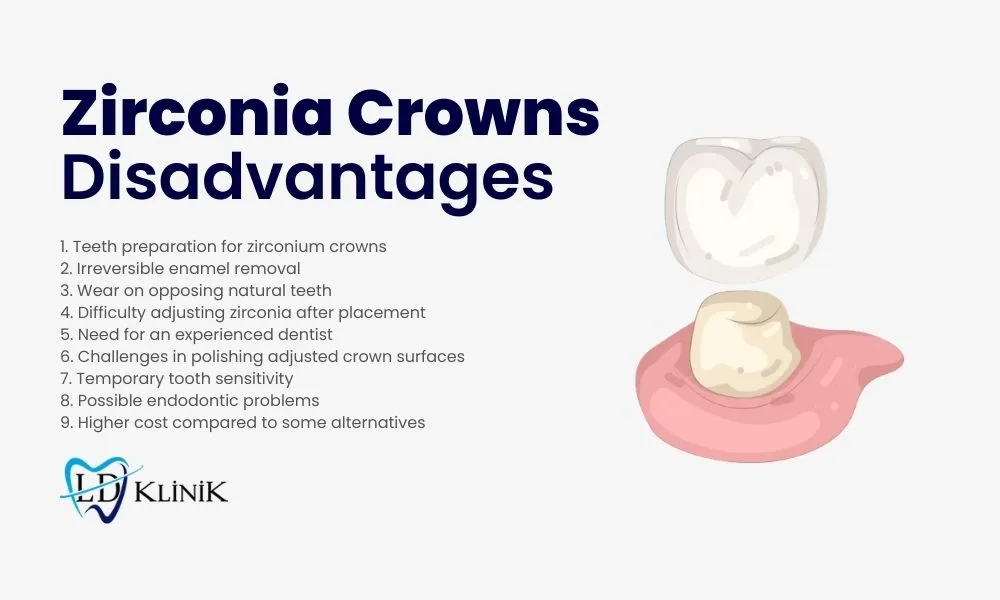
Zirconia crowns have a thicker and more durable structure than some other types of crowns. Therefore, sufficient tooth material must be removed to ensure that the crown fits properly. During this procedure, a small amount (around 0.5 mm) of preparation is performed on the occlusal (upper) and lateral surfaces of the tooth. In some cases, the tooth may have previously undergone crown treatment or may have lost a significant amount of material due to decay. In such cases, the natural strength of the tooth may be reduced. Excessive loss of material, especially in the anterior teeth, can weaken the tooth. Therefore, it is very important that the tooth is prepared correctly. Your dentist will advise you on this, and if necessary, you can consider a different crown type instead of zirconia.
When a zirconia crown is fitted, the enamel layer of the tooth is permanently removed. Enamel is the hardest layer of the tooth, protecting it from hot and cold temperatures, acids, and bacteria. Once this layer is removed, it cannot be restored. Therefore, once a zirconia crown is fitted, you cannot return to your natural tooth structure. Consequently, zirconia crown is an irreversible step in terms of tooth preservation. To protect the long-term health of your teeth, this treatment should be undertaken only if a crown is genuinely required.
Zirconia is a very hard material and, when in contact with opposing teeth, can cause wear on natural teeth over time. If your dentist shapes the crown appropriately and polishes its surface, this risk is greatly reduced. In addition, in some cases, selecting a material that is compatible with the crown or restoration on the opposing tooth can also help prevent wear.
It is difficult to make changes to the crown after it has been placed on the tooth. As zirconia is a very hard material, cutting or fine-tuning it requires special equipment and experience. Incorrect adjustments can weaken the structure of the crown or compromise its aesthetic appearance. Therefore, the measurements, shape, and height of the crown must be determined correctly in advance. It is critically important that the dentist fabricates the crown accurately in the laboratory and ensures the best fit during the initial placement in the mouth. To avoid these issues, dental clinics in Antalya use a method called digital smile design. After taking an intraoral scan with a 3D digital scanner, they prepare the teeth, place temporary zirconia crowns, and finally place the zirconia crowns that perfectly match the patient’s natural teeth.
The durability and aesthetic appeal of zirconia crowns depend on the dentist’s experience. An inexperienced dentist may fail to fit the crown properly or achieve a satisfactory aesthetic result. An experienced dentist takes accurate measurements, prepares the tooth appropriately, and ensures the crown is long-lasting. Expertise is particularly important for anterior teeth and other visible areas, where aesthetic expectations are high. Crowns should look just like natural teeth. An incorrectly selected tooth shade can result in an artificial appearance.
Surface imperfections may occur on zirconia following any adjustment. If these imperfections are not polished properly, they can appear unsightly and may increase plaque and tartar accumulation. This build-up can lead to gum disease and tooth decay. Proper polishing of zirconia crowns is crucial for maintaining oral hygiene and ensuring long-term oral health. To help maintain your dental health for years to come, your dentist will obtain your approval after fitting your crowns. If the fit is satisfactory, polishing is performed as the final step.
Tooth sensitivity may occur when the crown is cemented to the tooth. Sensitivity to hot and cold, or temporary discomfort, may be felt, particularly in areas close to the tooth’s nerve. This condition is usually short-lived.
Inadequate oral care can lead to plaque accumulation between the crown and the gum, causing gum disease. However, this is not specific to zirconia crowns, but rather relates to oral health in general.
Zirconia crowns are more expensive than other crown options due to their durability and aesthetic advantages. A price difference compared to metal-supported porcelain or certain restorative materials is normal. The longevity of modern zirconia crowns, the wide range of tooth shades available, and the natural appearance they provide are important factors that justify the cost. When planning your budget, it is important to consider not only the price but also your long-term oral health and aesthetic expectations.